

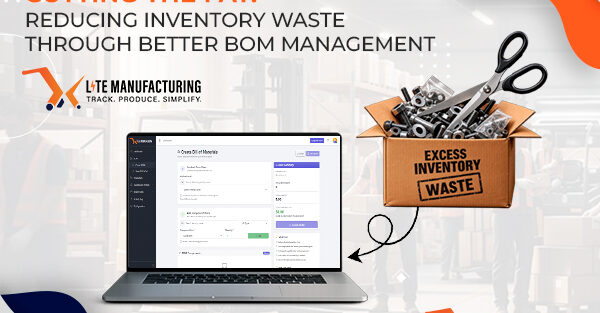

Inventory waste may become a major source of losses in manufacturing. Inventory waste sits in the dusty warehouse corner, occupies working capital resources, and drives carrying costs up. Although manufacturers tend to blame forecasting mistakes or supply chain issues for their overstuffed warehouses, the reason behind the problem lies much closer in the Bill of Materials (BOM).
Efficient BOM management is not only a must for an engineer; it is the tool to cut inventory waste and streamline the whole process.
The Problem: Why Bad BOM Generates Inventory Waste
Imagine the BOM as the recipe for your product. If there is something wrong with the recipe, you purchase the wrong ingredients. Incorrect, outdated, or structurally poor BOM will cost you a fortune.
Overstock of “phantom parts,” that is, items included into the BOM but not used during the assembly process, is one of the most obvious consequences. At the same time, missing parts will cause panic purchases, extra shipping expenses, and production downtime. Moreover, due to the lack of proper version control, procurement specialists could purchase parts according to an old engineering revision. The consequence is boxes of obsolete parts stored in the warehouse.
Solutions: Strategies for Effective BOM Management
Preventing waste from entering the manufacturing process through inventory at the receiving dock requires that companies take a proactive approach towards managing their bill of materials. The following four strategies are crucial:
Focus on Absolute Accuracy
All parts must be clearly described by their proper numbers and quantities. Inaccuracies are the enemies of lean inventories. When BOM includes, for example, “5 units of screws,” but does not give any details about the length, the type of thread and the material of screws, buyers will order too many of them anyway.
Adopt Standardization of Components
Engineers tend to create custom specifications for each component even when a standard component can be used instead. By performing analysis of your BOM’s and standardizing components, you will decrease the total number of needed. It will help you achieve lower minimum order quantities and decrease the chance of the component going obsolete once the product line becomes defunct.
Create an Unbreakable Change Management System
The adoption of the automated change control will allow notifying your purchase and inventory teams about the changes right away. If the component was substituted in the latest BOM revision, the system will automatically remind your team to use existing stocks first and adjust purchase orders accordingly.
Remove Silos by Integrating BOM Management Software with QuickBooks
A BOM is only as efficient as its ecosystem. When your BOM management software i.e. x2x Lite Manufacturing is integrated with QuickBooks, your procurement process becomes completely automated and incredibly accurate.
The Final Verdict
The bottom line when it comes to fixing your BOM’s has an enormous effect on your finances. Manufacturers that control their BOM’s effectively have a reduced number of carrying costs, a drastic drop in obsolescence and write-offs for inventory, and much better cash flow. Manufacturing processes are streamlined because everything is available at the time when it needs to be produced, so there is no need for any safety buffer due to distrust in engineering information.
Inventory waste prevention is not about buying fewer items. It is about buying the right items. You can turn your warehouse into an asset by managing your Bill of Materials as a well-controlled financial document.