

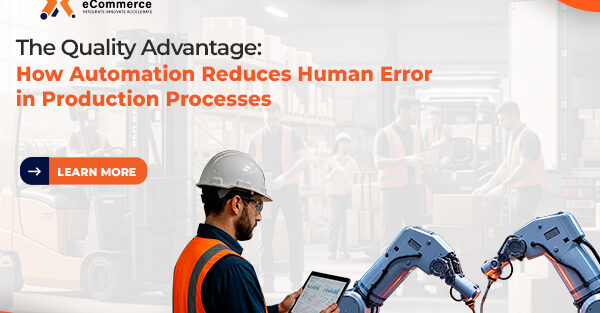

Go into just about any production line, and there is the same old annoying tale. An operator misunderstands the badly written work order and picks the wrong raw materials. This results in a scrap of whole finished products batch . This situation occurs on a regular basis in the business world, because one thing about humans is clear, we innovate and make mistakes. When people think about automation within the framework of their businesses, they think about time and productivity. However, there is one factor that should be considered, the ROI of automation for production processes.
The High Costs of the “Bad Day”
Human error can be more than just that in a manufacturing setting. It can be BOM errors, missing steps during assembly, miscalculations of inventory, and incorrectly programmed machines. All this adds up fast because not only are you paying for the waste of materials, but you’re paying for the time of redoing work. The cost of stopping the line to correct it, and expedited shipping to try to salvage any deadlines. The worst part is you lose business because of poor quality.
Why do humans make mistakes? Well, they are easily tired, distracted, and mentally strained by complex processes.
How Does Automation Remove the Variables?
Both robot-based automation and automation through process software remove the variables that cause mistakes. Here is how:
No More Manual Data Entry:
Most mistakes occur because of the “human middleman” who manually enters data from a piece of paper into the computer system. Automated manufacturing software solves this problem by eliminating manual entry. The system automatically takes care of all these functions when the worker scans a barcode or RFID tag for material issuance. If the worker enters the wrong part, it will be flagged instantly.
Process Rule Enforcement:
Automation functions as an electronic form of the poka-yoke methodology. Automation does not allow a person to proceed to step three if step two has not been done. For example, if a machine needs a certain torque on a particular bolt. An automated device locks out until such a requirement fulfils.
Infallible Reliability:
In a case where the process is automated, there is always uniformity in the method used. From a CNC machine cutting metal to the micrometre accuracy to the automatic generation of purchase order for raw material whenever the reorder point is reached, there is always uniformity in automation.
Real-Time Exception Management
Instead of waiting for an error to be discovered hours later at the inspection point, automation provides you with the real-time view of the process. In case the machinery deviates from the appropriate temperature range, the system will instantly notify operators about that and prevent the mistake from ruining the product.
Raising the Level of Your Human Workers
It is crucial to remember that the use of automation technology will not lead to a reduction in the number of your human workers. Instead, it will raise their level. By delegating repetitive, monotonous, and extremely precise tasks to automation technology, you give yourself an opportunity to focus on solving problems and making innovations.
The Bottom Line
In conclusion, it is safe to say that automation is all about ensuring consistency in your production processes and protecting your bottom line.