

However, in the competitive retail business environment, margins tend to be quite small. The solution to achieving better profit levels for retail managers does not necessarily lie in increasing sales but rather in reducing waste. Although growing sales figures will attract much attention, the most profitable companies understand that maximizing margins requires efficiency in operations.
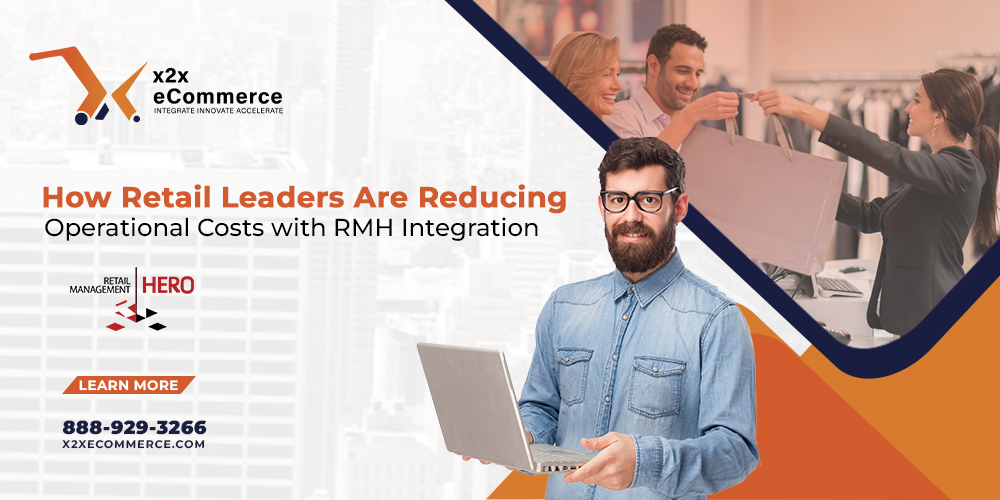
In this regard, RMH integration becomes a crucial aspect for saving money. Indeed, while RMH is an advanced POS system, its true cost-saving capabilities can only be fully realized by integrating RMH with the ERP platform used within the company. This involves linking the sales process at the point-of-sale level with the back-office processes. As a result, retailers are now able to significantly reduce their operational expenses through improved efficiency in managing people, inventory, and errors.
1. Cutting Out Costly Manual Labour
Perhaps the first area where savings is seen through the integration of RMH is in cutting out the “double entry”. Without integration, retail staff may be spending valuable time entering data into the accounting system by hand. Not only is manual Labour expensive; it also means putting people who have valuable skills towards unnecessary tasks. Integration of RMH with an ERP means that all data is fed automatically into accounting systems, and that at the end of each month, the accounting department does not spend countless hours matching up spreadsheets to reconcile accounts. Time spent manually reconciling accounts could be better spent analysing them.
2. Managing Inventory Costs
When RMH is integrated, a business gains instant visibility of their stock levels throughout all stores. As such, retailers will be able to implement a just-in-time inventory strategy, whereby they order stock on an ad-hoc basis according to actual sales velocity rather than on a gut feeling. This means far less surplus stock and less money tied up in stock and in carrying costs.
3. The Decrease of the Cost of Mistakes Made by People
The manual entering of information is a slow and expensive process which has the potential for human mistakes that may affect a business badly. Entering a wrong decimal point, mistake in a PO number or a failure in synchronization of prices can be quite a loss of time and money. Integration eliminates the human factor completely from the process of data transfer. Once a purchase happens in the RMH, the quantity of inventory changes in the ERP immediately. When a new product has been added in the ERP, then it will appear automatically in the POS with correct price and description. Thus, with reliable data, businesses avoid the expenses related to data inconsistencies.
4. The Smart Purchasing Decisions
And finally, integration makes possible purchasing of goods more wisely. By having all the data in one system, management can analyse the purchases made in several shops and negotiating with the suppliers on better conditions. Retailers will be able to order in bulk quantities to save on shipping and purchasing costs. Accurate demand prediction prevents unnecessary “panic buys”.
Conclusion
In the context of retail business environment, the implementation of technology solutions is not only a technical issue but a financial one as well. Through the connection of RMH with a centralized ERP system, organizations remove any wastage that drains the profits. In a cutthroat environment where money makes the difference between life and death, efficiency can be the deciding factor. The successful retailers of today are those who no longer run their companies on disconnected spreadsheets.