
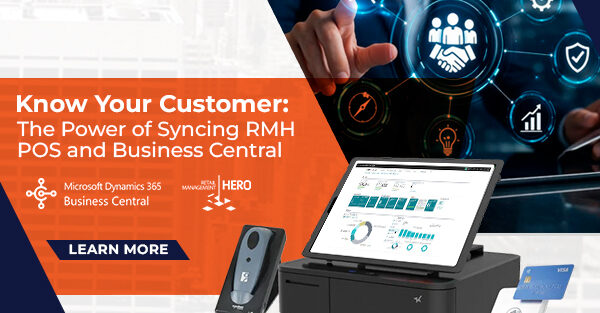
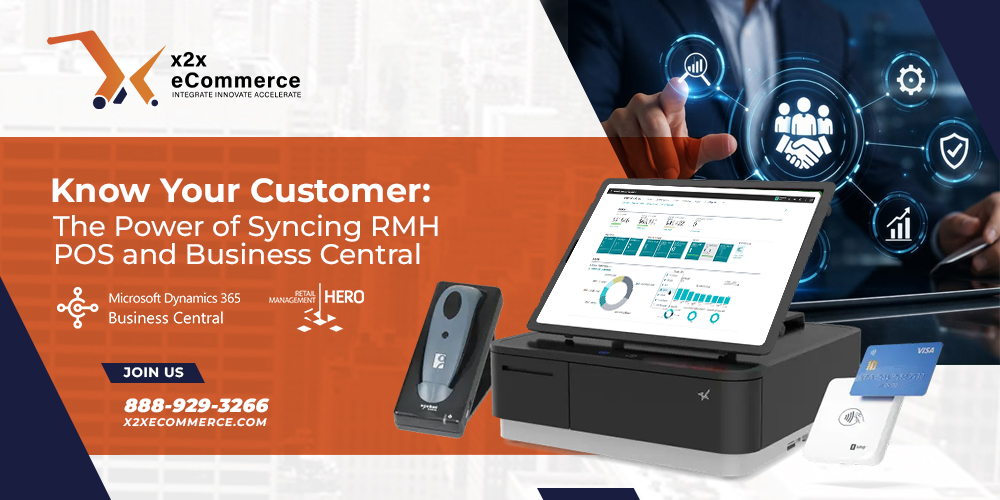
In the current environment, the item that you sell will not help you succeed in your business. Also you need to think about building relationships with the buyer. Achieve this relationship by knowing the client, their purchase history, and their preferred payment method. Unfortunately, there is a problem when using several systems, since each of them has its own database. On one side, you have a RMH POS system, which stores frontline data. On other side Microsoft Dynamics 365 Business Central on the other hand stores general data regarding finance. This creates an issue where the retailer does not get a holistic picture of the shopper. To overcome this problem, we recommend implementing proper integration between RMH POS and Business Central to have all the information in one place. Single Source of Truth.
The Problem: Isolated Data
If not synchronized, your customer data will reside in different realities.
From The Sales Floor Perspective: While your cashier recognizes the client who made the purchase of the shirt the previous week, she does not know that the customer owes money from a transaction that occurred half a year ago.
From The Back Office Perspective: When your accountant sees that there is still money owed in Business Central, she cannot see what has been purchased recently in your store by the customer in question.
This results in friction for both sides. The customer gets irritated having to repeat herself, while you lose profits as potential credit risk is ignored.
The Solution: Two-Way Data Synchronization
Integration means that the customer should be one and the same, no matter if the customer is standing at the register or being studied in the boardroom. The tool used for this purpose will be two-way synchronization.
The advantages of such synchronization include the following:
- Unified Customer Profiles
If a new customer joins a loyalty program at the RMH point of sale, all his information (name, email, telephone number) will automatically be synchronized with Business Central. Also, customer account in Business Central and the same customer account in RMH can linked together.
- More Accurate Marketing Data
Accurate data is vital in marketing campaigns. With the data spread between the POS and the ERP, there is a likelihood of sending duplicate emails or out-of-date catalogues. Integration ensures your marketing team is using a single database, allowing for the segmentation of customers according to their overall value based on sales and accounts receivable.
Conclusion
Consumers expect companies to know who they are and appreciate them as clients. Your customers should not be forced to put up with an inconsistency that comes from your systems.
Data integration between RMH POS and Business Central is not only a technology upgrade but a fundamental change in how your business operates. This integration creates the connection you need between the front-end and the back end of your business, providing accurate and timely information necessary to make better decisions and reduce risks, while improving the customer experience.