
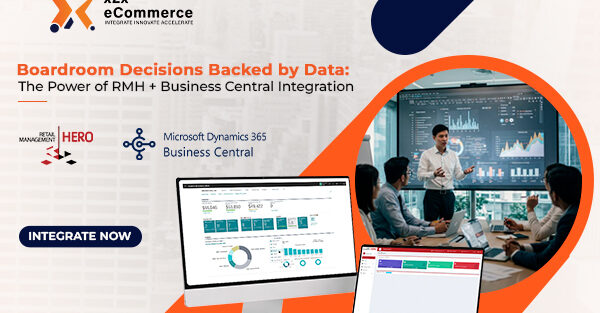
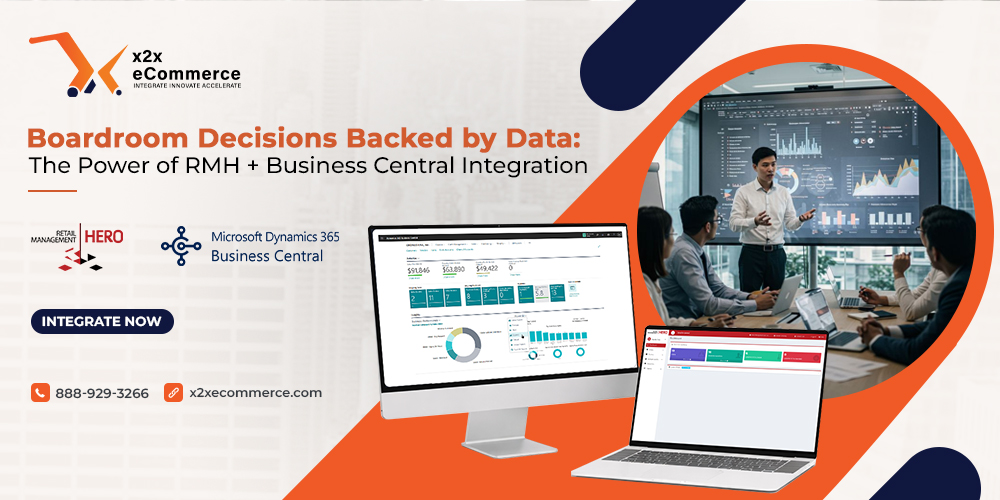
Step into the boardroom of any modern-day retailer, and the atmosphere speaks volumes. Gone are the days where “intuition” was the key to good business practice. In today’s world, the CEO, CFO, and Operations Director are supposed to make informed decisions that help propel the business forward towards growth, margins, and sustainability. But how? They require much more than their monthly numbers, they require insight, all in one place. When it comes to Retail Management Hero-RMH and Business Central as your back-office and point-of-sale software, respectively, the possibilities are endless. Yet, it is through the integration of RMH and MS Dynamics 365 BC that those possibilities become reality. It is the integration that allows you to get all that you need from your data.
Dismantling the Data Silos
A common problem in many retail companies is the gap between what happens on the operational level and the way things appear in financial statements. The RMH system is brilliant when it comes to collecting sales information; it provides detailed statistics regarding transaction speeds, SKU velocity, and cashier effectiveness. The Business Central software, on the other hand, specializes in financial consolidation, logistical tasks, and GL accounting.
Without integration, the company loses its boardroom edge. A finance manager may notice favourable revenue trends in Business Central while staying ignorant of the fact that shrinkage is soaring in stores; these trends are stored in RMH. Alternatively, operations could be replenishing shelves based on floor sales while ignoring the cash flow problems evident in ERP. With integration in place, every transaction made on the floor will be immediately recorded as affecting the company’s bottom line.
From Retrospective to Predictive
The real value of combining RMH and Business Central is in making the transition from retrospective analysis to predictive analysis. With open and instant data, the boardroom is equipped with insights that enable it to plan of time.
1. Effective Inventory Management
Inventory is the most substantial asset for any retail company; however, it could turn into the company’s biggest liability if not utilized properly. By merging the data, you get to see sales velocities relative to your inventory. You can pinpoint your non-performers quickly and come up with ways to markdown them to make room for new stocks. Alternatively, you can track your high-performing products to prevent them from running out of stock.
2. Precision in Profitability Analysis
“Revenue is vanity, but profit is sanity”. With an integrated system, you have the capability to dig deeper than the revenue number. You can do detailed analysis on the profitability in terms of channel, store, or even specific products. The board will be able to decide whether to expand stores or reduce in size because they know which stores contribute to the profitability.
3. Efficient Financial Reconciliation
From the point of view of the finance department, an integrated solution ensures no “end-of-month closing.” As RMH sales numbers will feed directly into the GL in Business Central, your financials are updated all the time. The board can review the financial health of the company anytime they want, not just end-of-the-quarter basis.
Strategic Advantage
Integration of RMH and Business Central comes down to giving power to leadership. The goal is not only to analyse data but to provide leaders with insight. Instead of asking “How have we done over the past month?”, you should ask “Where shall we go next quarter?”
In the current highly competitive retail environment, the key to success is speed. By consolidating information and gaining insights from it, you will be able to guide your company’s development confidently.
Do not leave any chances for your business competitors by making your decision based only on half the picture. Integrate your systems today and benefit from this opportunity!