
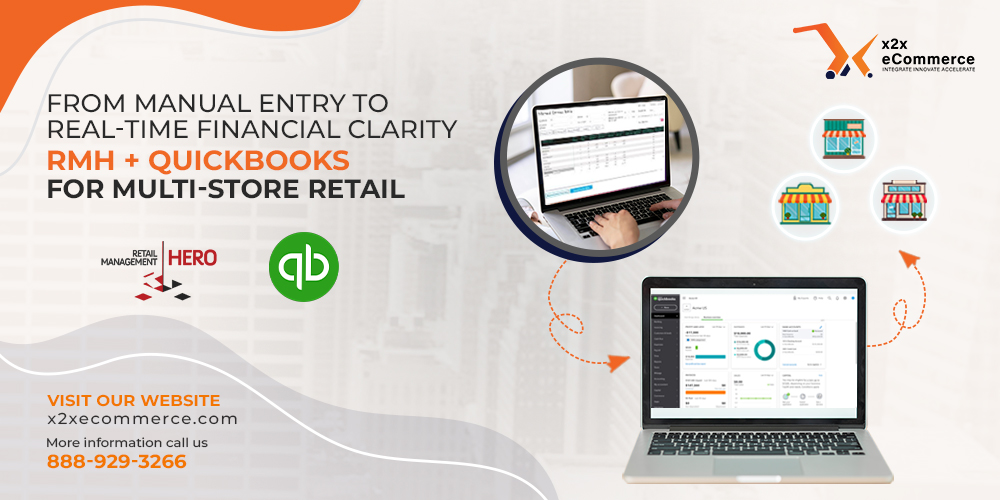
Things can get complicated fast in multi-store retail. Each location has its own sales, stock movements, returns, cash reports, and inventory adjustments. All the finances need to be rolled up into one centralized accounting hub-usually QuickBooks. Unfortunately, most still use a manual process to transfer the data from RMH into QuickBooks, which creates inconsistent numbers and delays that could be costly. By removing the friction, the x2x eCommerce RMH-QuickBooks integration brings true financial clarity across all your stores.
Multi-Store Retail = Multiplied Challenges
Operating more than one location means juggling
- Sales volume differences
- Multiple stock transfers
- Location-based promotions
- Diverse tax profiles
- Multiple cash and card reconciliation points
- Distinguish between adjustments and write-offs of inventory
When every store manually passes on data to the accounting firm, this is what you face
- Inconsistent inventory
- Insufficient COGS value
- Duplicate or missing financial entries
- Delayed profitability reporting
- Hours wasted on reconciliation
But it takes just that one little mistake in one store to snowball into incorrect financials across the business.
Why multi-store retailers need RMH-QuickBooks Automation
The idea behind this RMH integration by x2x eCommerce is to make multi-store operations using QuickBooks much easier. Here’s what it delivers:
1. Centralized Financial Information for All Stores
All locations send their sales data into QuickBooks directly, with no manual effort required.
You get consolidated financials and store-level detail: the best of both worlds.
2. Seamless Inventory and COGS Sync
Inventory movements from each location in form of sales, returns, adjustments, and transfers map cleanly into QuickBooks.
This ensures the proper calculation of COGS and margins for each store.
3. Seamless Multi-Store Transfer
The integration ensures that the movement of the stock from Store A to Store B is recorded as such for proper updating of inventories.
4. Real-time Reporting
With the continuous flow of data, management can:
- Compare store performance
- Daily profitability monitoring
- Check stock levels
- Shrinkage review
- Make fast data-driven decisions
- No more waiting for accounting to “catch up.”
- The Biggest Benefit: Decision-Ready Financials
No manual entry means that, finally, the management gets clean and accurate numbers. This means:
- Better planning
- Better budgeting
- More confidence in store performance metrics
- Zero delays in month-end closing.
For multi-store brands, clarity like this is a growth multiplier.
Final Words
If your retail chain is operating several sites, then tightly integrate your financial systems with your POS. The x2x eCommerce RMH-QuickBooks integration ensures that your stores are running smoothly, your books are up-to-date and accurate, and also your decisions are made on real-time data-not outdated spreadsheets. This is how modern multi-store retailers remain agile and scalable.